
In the United States, choosing a domicile for a corporation, is not merely an operational decision. It is a careful selection by entrepreneurs picking the state that favors their priorities the most. For decades, Delaware has dominated the field, with over two thirds of Fortune 500 companies domiciled in the state. The First State offers appealing tax structure, flexibility, and protections to its incorporations, but the Chancery Court is by far the biggest advantage.
What Is “DExit”? Why Companies Are Leaving Delaware
Established in 1792, the Chancery Court is designed to handle commercial disputes of complex nature that require equitable remedies. The Court has built a meticulously successful reputation, becoming the go-to for legal disputes of corporate giants.
However, after the infamous ruling regarding Elon Musk’s compensation package by the Delaware Chancery Court, many companies have lost the trust they long placed in the state’s judicial system. As a result, a phenomenon known as DExit emerged – major incorporations exiting Delaware to domicile in other jurisdictions.
When major executives begin questioning the neutrality of the world’s most esteemed corporate legal system, states do not remain aloof. While DExit is not a mass and immediate exodus, it is a major push for states such as Texas, Wyoming, and Nevada to position themselves as prospective competitors for attracting domiciles.
How Wyoming and Texas Are Competing for Corporate Domiciles
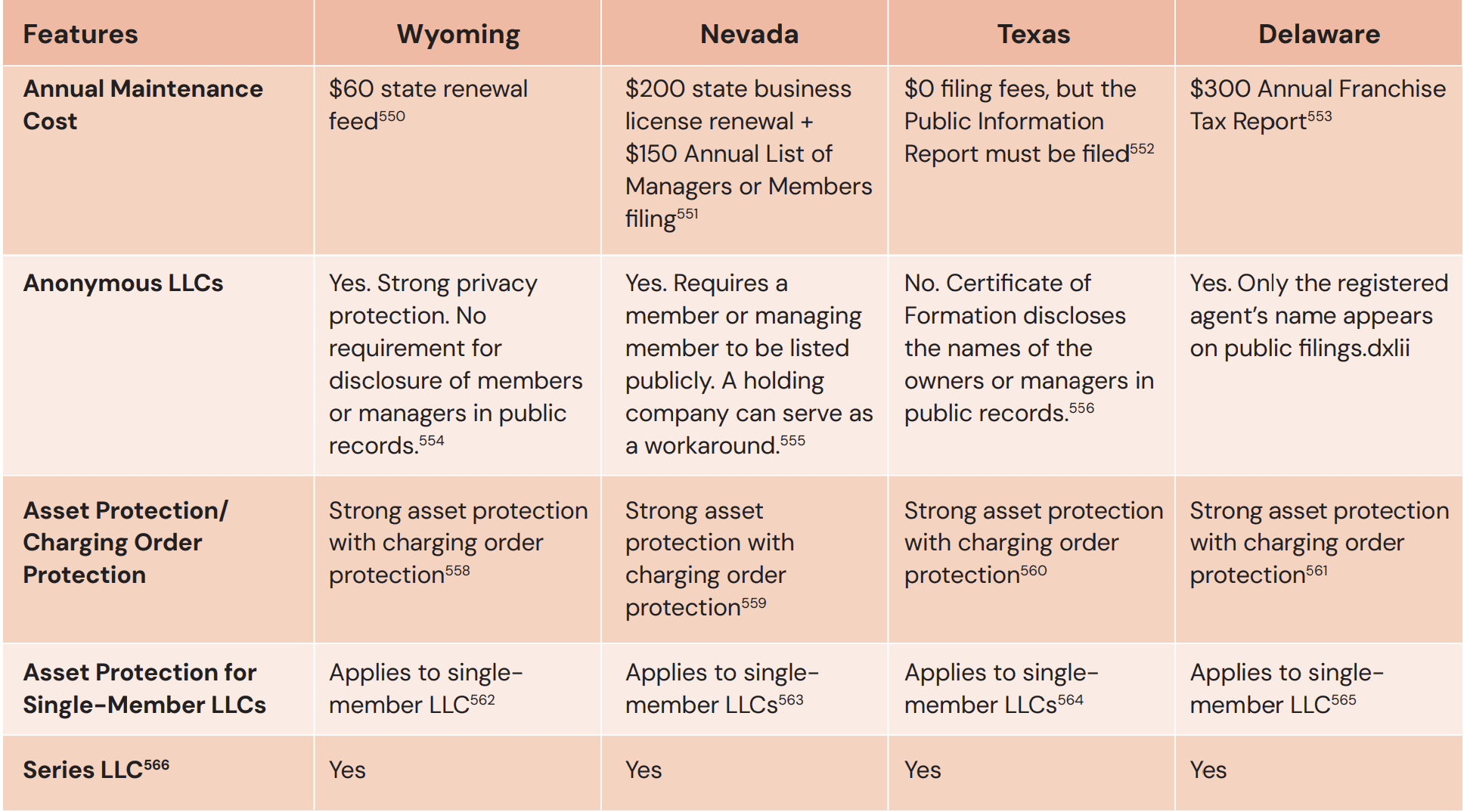
Wyoming competes on simplicity and cost of forming a business. The cost of maintaining an LLC is a fraction of the cost in Nevada or Delaware. The state was the first adopter of Limited Liability Company laws, and the statute has remained straightforward since. With minimal reporting requirements, high protections for both assets and anonymity, the state is an attractive domicile for many.
Additionally, in 2019 Wyoming established its Chancery Court to handle commercial, business, and trust cases. Although significantly smaller in size, the structure and benefits of the court are extremely similar to that of Delaware’s. The court employs exclusively bench trials and prides itself in expeditious case resolution timelines.
Texas, on the other hand, does not allow as much flexibility for anonymous LLC formation; however, it offers a favorable tax climate for corporations. Alongside the strong political push to attract more corporate entities, the Lone Star state established statewide business courts.
Currently, 5 out of 11 divisions are actively operating – Dallas, Austin, San Antonio, Fort Worth, and Houston – each presided by two judges who are appointed by the Governor. The state is not merely positioning itself as a competitor, but as Delaware’s successor, as companies like Tesla, SpaceX, and Coinbase redomicile.
Nevada’s Strengths and Weaknesses in Attracting Businesses
In comparison, Nevada offers strong liability shields and privacy protections at a significantly higher cost. Registering an LLC in the Silver State will cost at least $425 with annual maintenance costing at least $300. Regardless, with relatively favorable tax structure, Nevada evidently competes – Dropbox, Andreesen Horowitz, and TripAdvisor chose Nevada upon their exit from Delaware.
Compared to aforementioned states, Silver State does not offer a specialized commercial court for domiciled entities, but legislators were determined to change this. Lawmakers successfully passed Assembly Joint Resolution 8 (AJR 8) during the 83rd session, a proposal to amend the constitution for the establishment of a business court.
Now, the proposal needs to receive legislative support in the 2027 legislative session, and if successful, public support on the 2028 electoral ballot. AJR 8 presents a serious attempt to increase competitiveness and attract more economic activity to the state. Establishment of a business court will level the playing field signaling specialized judicial expertise and speedy legal remedies.
Beyond Business Courts: Building a Competitive Business Climate in Nevada
However, the business court alone cannot win the competition. Businesses evaluate each state as a multifaceted package. Hence, competitiveness needs to be cumulative – advantages cannot cancel one another; they need to compound.
Alongside a well-designed and efficient business court, the Silver State needs to improve its tax statute, consider lowering incorporation fees, and decreasing administrative entry barriers. With a strong infrastructure for the charter market, Nevada can also signal stability to the business market (yet another valuable component of a climate that can drive incorporation).
If Nevada wants to compete for the next generation of incorporations, it must think holistically. A business court will enhance credibility, but sustained competitiveness requires balance across taxes, fees, workforce access, and regulatory clarity.
Stay Ahead on Business and Policy in Nevada
Get clear, timely insights on corporate law, business climate trends, and policy changes shaping Nevada’s future. Sign up for our newsletter to stay informed, make smarter decisions, and never miss important updates.