
Imagine this: you take your child to school in the morning only to find out that the local teacher union is striking for the day. This means that you will now have to find a nanny for a week or ask for time off at work, help your child with learning loss, and face all the financial repercussions. This was the case for many parents across the Clark County School District, in September of 2023.
When Strikes Disrupt Families and Classrooms
Strikes by public employee unions are illegal in many states across the nation because they halt essential service operations. Nevada’s public sector unions jointly agreed to make striking illegal in exchange for mandatory arbitration rights that guarantee a contract. These provisions were extended to teacher unions in 1991.
However, in recent years Clark County Educator Association (CCEA) employees were growing increasingly impatient with contract negotiation timelines. As a result, they conducted “rolling sickouts” across eight different schools with up to 87% of teachers calling in sick on the same day. The court ruled sickouts to be an act of a strike – explicitly illegal in the state at the time – amid an impasse in arbitration with CCSD. Unsatisfied with the ruling, CCEA then filed a petition for a ballot measure to put teacher union’s right to strike up to a public vote.
How Nevada’s Legislature Reshaped the Rules
During the 83rd legislative session, the legislature tried to get ahead of the ballot measure by passing Senate Bill 161. Diligently influenced by the teacher unions, this measure tightens the mandatory arbitration deadlines and arbitrator selection process. Perhaps more importantly, SB 161 exempts teacher unions from acts of strikes and related punishments, arguably granting them the right to strike in a different form.
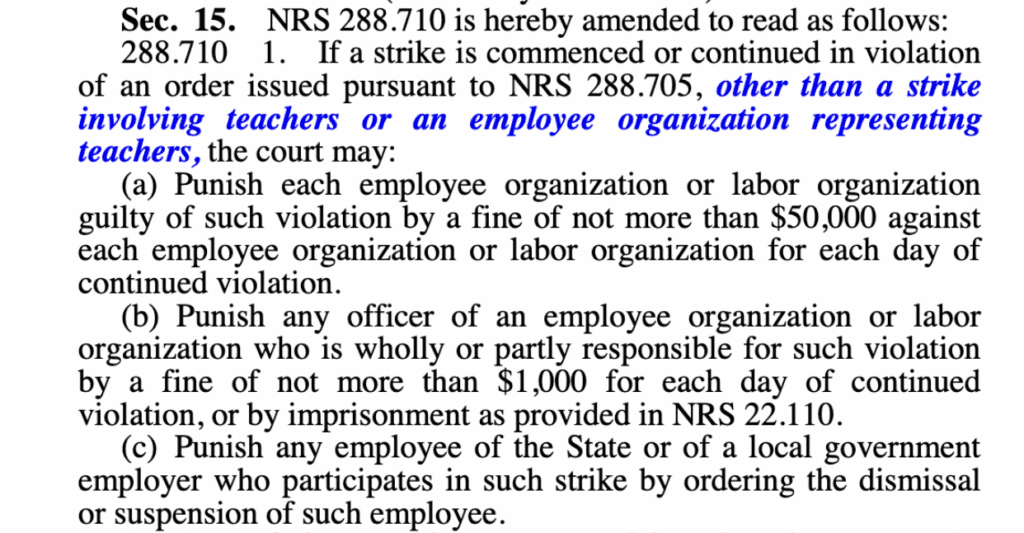
According to the new legislative language, a concerted action can only be ruled a strike if it has occurred “on a district-wide basis.” For a district like Clark County, with over 370 schools, this means that educators from hundreds of schools can go on a strike without repercussions, as long as teachers from one school don’t participate.
The Growing Power of Teacher Unions
Across the nation arbitration is seen as a tradeoff for the right to strike since it guarantees a contract as opposed to strikes. However, when the two are combined they turn into a dangerous tool for unions to hold uneven power in negations.
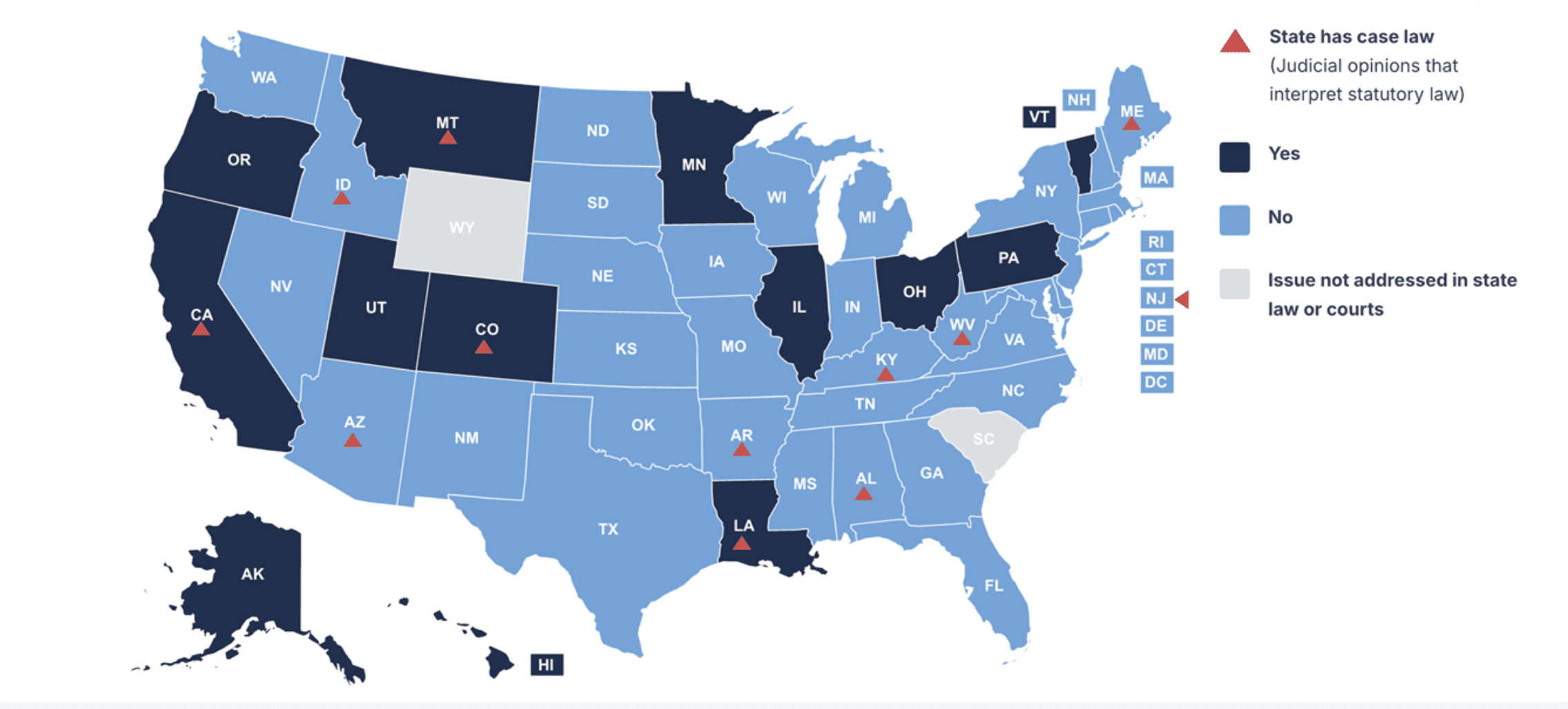
Among the 13 states that have statutory protections for teacher union strikes, only three – Hawaii, Illinois, and Pennsylvania – offer compulsory bargaining with arbitration as well. The remaining 10 do not offer teacher unions mandatory binding arbitration privileges and permit strikes under special circumstances.
Parallelly, 33 states have laws requiring public school districts engage in collective bargaining. Ironically, in an attempt to prevent irreversible constitutional amendment that CCEA was seeking through a ballot measure, the legislature ultimately granted them unprecedented power. This once again showed the immense political sway of the teacher unions in the Silver State while prioritizing labor union satisfaction over student achievement.
Stay Connected. Stay Informed. Make an Impact.
Stay informed on the issues that impact Nevada families and classrooms. Sign up for Nevada Policy’s email alerts to get timely updates, in-depth analysis, and opportunities to make your voice heard. Together, we can ensure that education policy puts students first.