As more states race towards energy independence, one option remains untouched by Nevada – nuclear energy. This seems to be a missed opportunity for the Silver State as both federal and state policy momentum is building in favor of more investment and innovation in the field.
The Current State of Nuclear Power in the United States
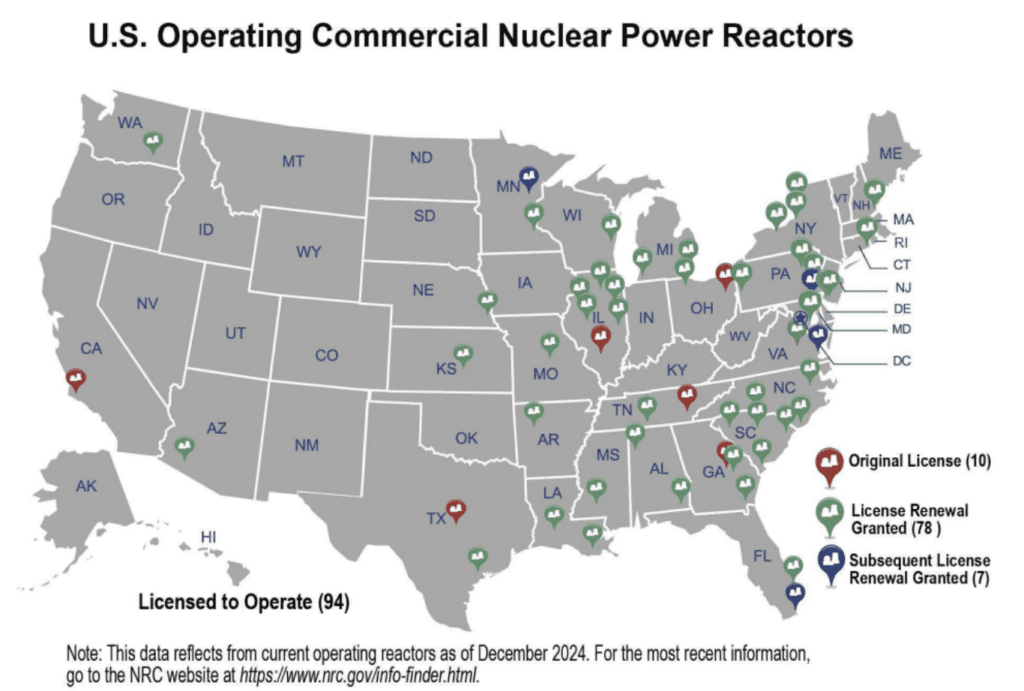
Currently, the United States boasts 94 operating commercial reactors across the nation, responsible for 18.6% of the country’s gross electricity share. Heavy majority of the existing plants are clustered in the East Coast and Midwest, with only 3 states – California, Washington, and Arizona – housing reactors in the West.
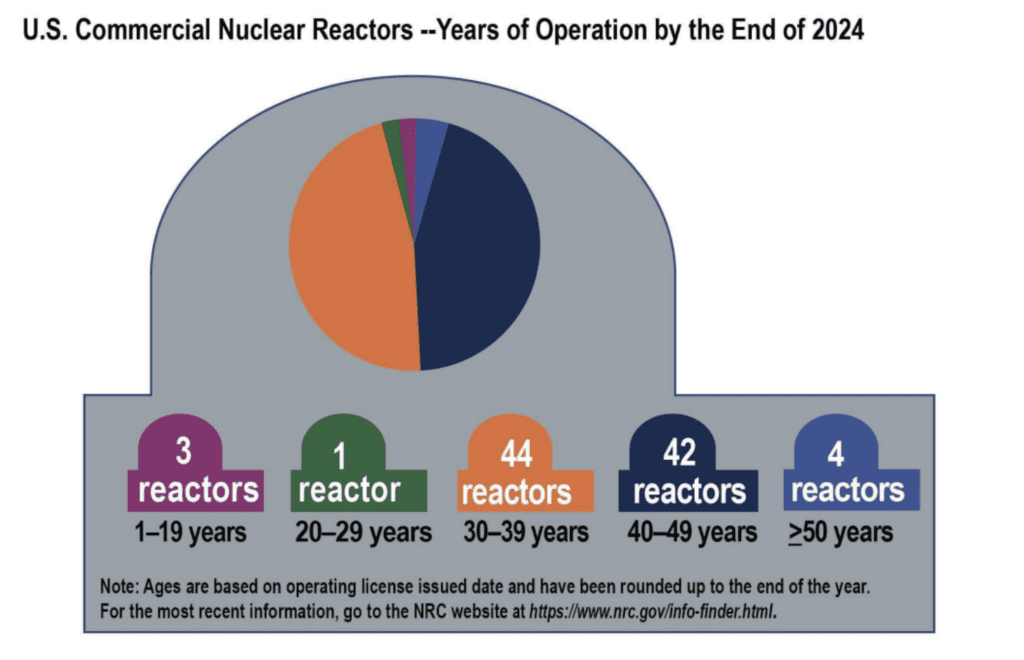
Importantly, 90 out of the 94 reactors in the U.S. have been operating for 30 years or more. While the lifespan of a nuclear reactor can reach up to 80 years, (because longevity is a key feature of their architecture) many of the existing reactors have first- or second-generation designs. As the country looks for ways of greater use of nuclear energy to meet future demands, Nevada stands to benefit if policymakers permit the development of modern reactor designs.
Global Leaders in Nuclear Energy
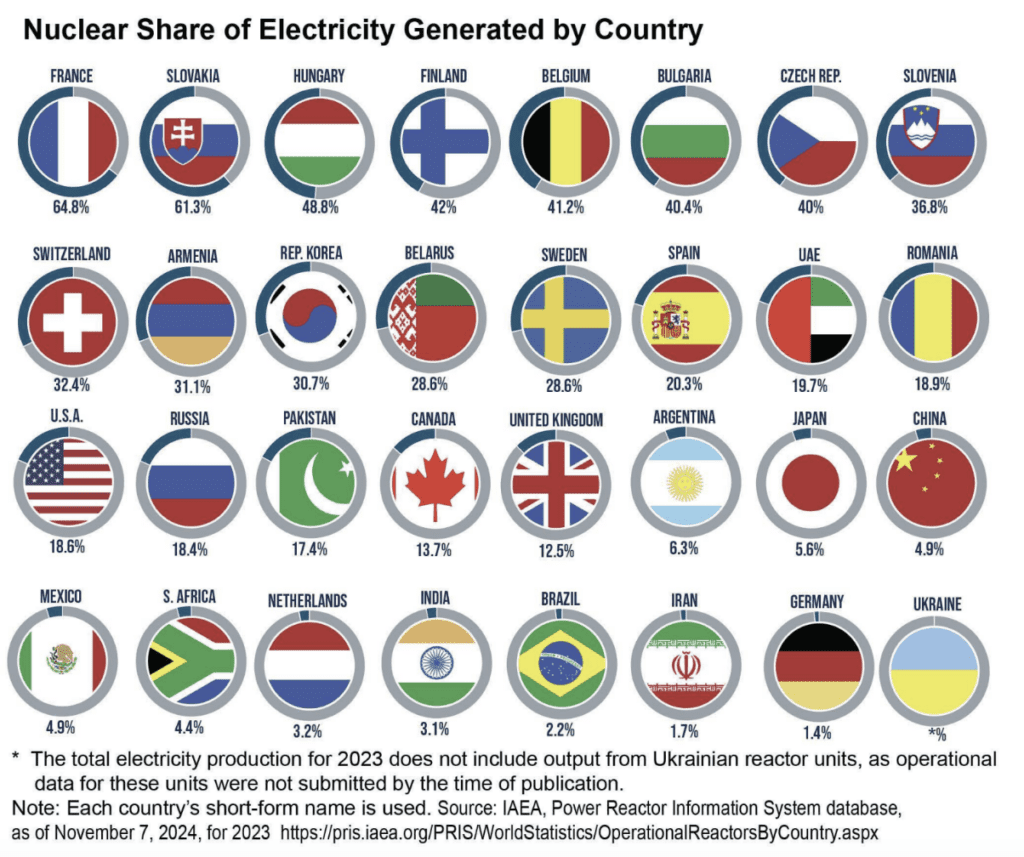
Interest in nuclear innovation is not new by any means. Countries around the world have spent decades investing in nuclear energy infrastructure and modernizing their portfolio. France is an undeniable leader with nuclear reactors generating 64.8% of that nation’s electricity. France currently has 57 nuclear reactors, making it the world’s largest net exporter of electricity due to the very low cost of generation. Since 2022, President Macron has moved away from the country’s previous stated goal of following Germany in nuclear divestment. Instead, France has choosen to invest in six new nuclear reactors by 2035.
Japan is also a leader in the field of nuclear energy generation. Following energy outages in 2021 caused by heavy storms, the country’s energy policy has shifted back to nuclear reactors as the most reliable source. Japan is now reviving old nuclear plants and investing in new ones – a change that is likely to displace generation from fossil fuel sources, mainly natural gas, which accounted for 33% of all Japan’s electricity generation in 2024.
Importantly, Japanese Prime Minister Sanae Takaichi, in collaboration with President Trump, announced an investment in Small Modular Reactors (SMRs) in Alabama and Tennessee to stabilize energy prices in the U.S. SMRs are modern designs that are self-contained, include passive safety systems that can stop a chain reaction without human intervention, and require little space or site preparation and can even be deployed on a mobile basis to boost power supply where it is most needed.
Rising Energy Demand Is Driving a Nuclear Comeback
Nuclear power has captured renewed attention internationally as power needs accelerate in the face of artificial intelligence and other modern innovations. For the first time in a generation, this interest has even percolated into the United States, which decades ago strangely abandoned the greatest scientific achievement in its history.
Nevada’s neighbor Arizona is currently considering various bills to attract and ease the installation of SMRs. The push from legislators comes amid growing desire to attract data centers while also meeting their electricity needs. States like Indiana, New Jersey, and Texas have also enacted various legislative measures to encourage adaptation of SMRs.
How Advanced Nuclear Technology Could Benefit Nevada
Nevada stands to uniquely benefit from the growing momentum of nuclear energy. As of 2022, about 86% of all the fuel energy consumed by the state is imported, making Nevadans extremely vulnerable to external factors, such as policy changes in California. On the other hand, the state rests on vastly empty lands, 86% of which is owned by the federal government and can be suitable for nuclear power plants. This power could provide for the growing energy demands of Nevadan families and businesses.
Additionally, nuclear engineering and reactor construction could develop into an important industry in the near future requiring a highly skilled workforce. For a state that is already heavily invested in renewable energy, nuclear energy can be an important baseload power source that provides reliable energy to balance the inherent volatility of production from so-called renewable sources.
The Future of Energy: Will Nevada Embrace Nuclear Power?
The Silver State, like its counterparts nationwide, should consider ways to create a policy environment that fosters innovation and attracts investment in the industry. Whether this be modernizing the existing moratoriums and bans on nuclear waste disposal, experimenting with SMR legislation, or including nuclear energy in the state’s clean portfolio, lawmakers have important choices before them. The future of human development is likely powered by modern nuclear reactors, and Southern Nevada could become a global hub for the engineering behind this movement.
The question is no longer whether nuclear energy has a future—it’s whether Nevada wants to be part of it.
Stay Informed on Nevada’s Energy Future
Stay ahead of the policies shaping Nevada’s energy future. Get clear, data-driven insights on nuclear energy, energy independence, and state policy delivered straight to your inbox. Our newsletter breaks down complex issues into practical takeaways—so you can understand what’s changing and why it matters. Sign up today to stay informed and be part of the conversation shaping Nevada’s next chapter.