Nevada is adding data centers fast. Here is what that actually means for your water, your power bill, and your paycheck, backed by real numbers instead of talking points.
Data centers are showing up across Nevada, from the outskirts of Reno to the desert east of Las Vegas. Each new project brings the same three questions from the neighbors nearby: how much water will it use, what will it do to the power grid, and is the state actually getting a fair deal for the tax breaks it hands out.
This page pulls those questions apart one at a time. Explore the interactive map to see where projects stand across the state, or jump straight to the pillar that matters most to you.
Operating and planned data center facilities across Nevada. Hover a dot for the name and location, click for details, and zoom in to separate facilities on the same campus.
Operating and planned data center facilities across Nevada. Hover a dot for the name and location, click for details, and zoom in to separate facilities on the same campus.
Click on a question to learn more.
Water Usage by Industry
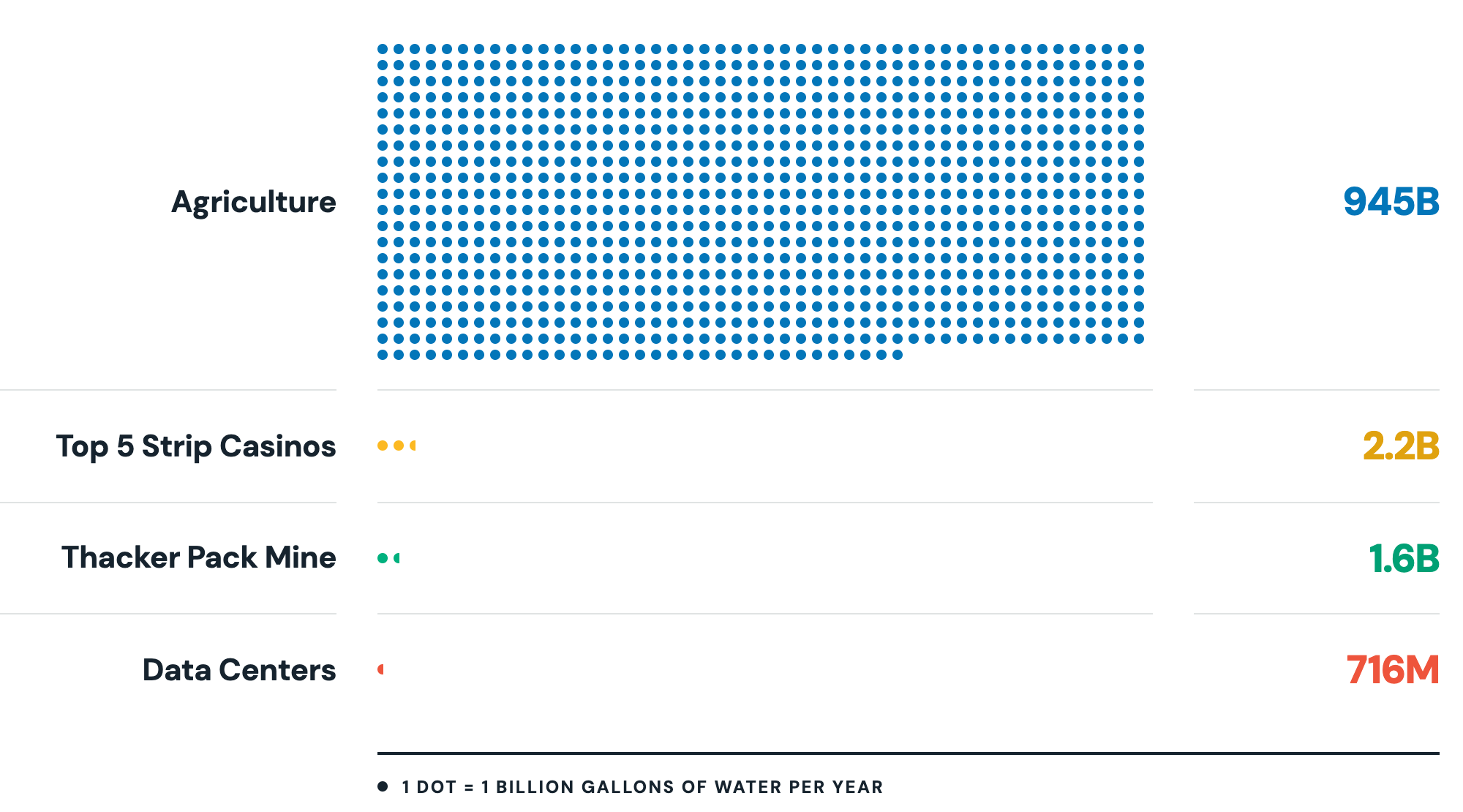
Sources NV State Water Plan, LV Review-Journal
Data centers in Nevada do use water, primarily to keep servers cool, but the scale is often overstated relative to other major users like casinos or golf courses, which draw far larger volumes.
Many facilities already operate with surprisingly low consumption by relying on air cooling or closed-loop systems, and the industry continues to innovate with recycled non-potable water, advanced liquid cooling, and designs that eliminate traditional evaporative cooling altogether. These advances mean newer and upgraded sites can deliver the computing power modern life depends on while steadily reducing their water footprint.
Percentage of Nevada's Energy that's Imported
86%
Percentage of U.S. Energy that Comes from Nuclear
18.6%
Nevada families do not get much say in how power costs are divided up. A handful of regulated utility decisions determine whether a new data center’s power demand gets passed on to your bill or absorbed by the project itself.
That is a competition and accountability problem, not a data center problem. Nevada Policy tracks who is deciding these rates and whether Nevadans get a real seat at the table.
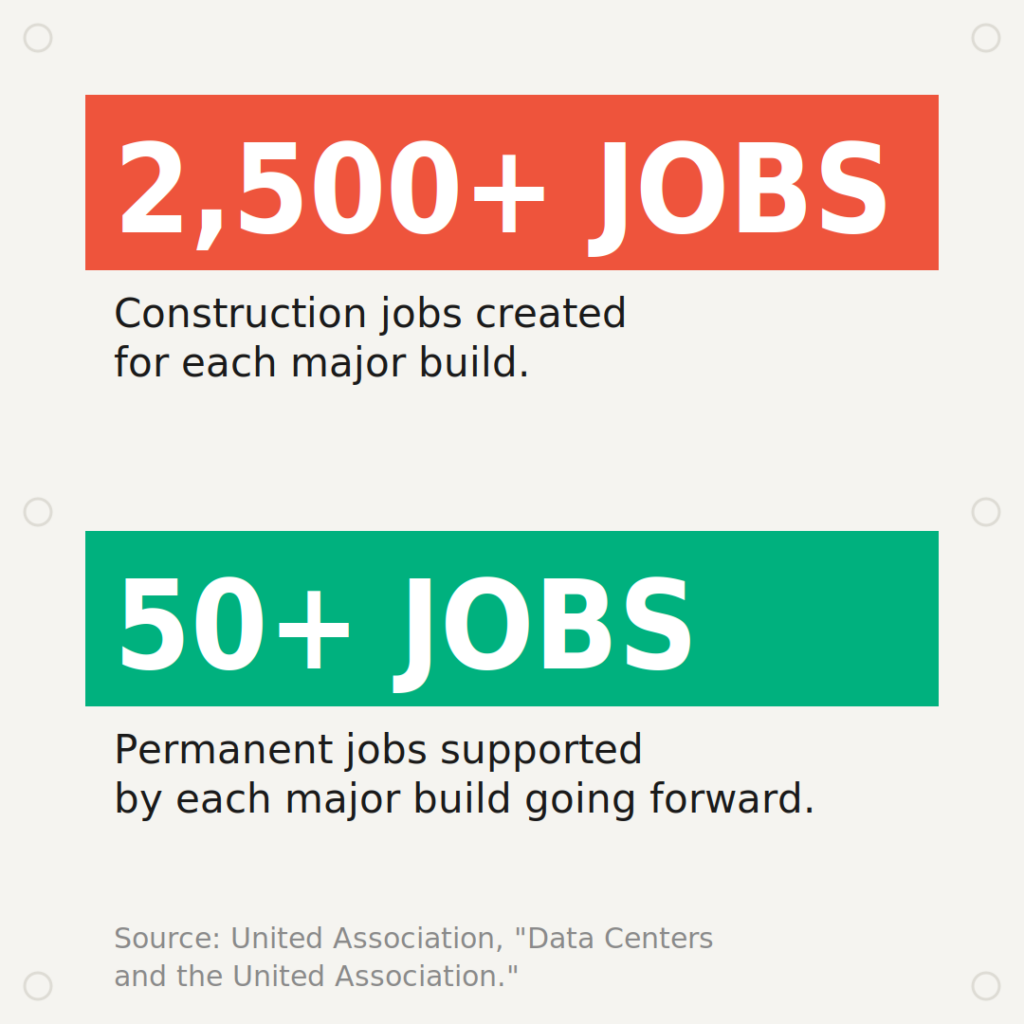
Permanent jobs are modest. The payoff is construction work, investment, and tax revenue. The real question is whether the tax break Nevada gives up is a fair trade.
Once a data center is built, it employs few highly skilled people, and Nevada’s own law admits it — the tax break requires as few as 10 jobs. So, the real question is not whether these buildings create thousands of permanent jobs. They do not.
These facilities anchor Nevada in the technology economy, build demand for the high-skill workforce that tomorrow’s industries will compete for, and throw off major tax revenue that state and local governments can put to work.
Sign up for Nevada Policy’s weekly emails and see the real numbers on water, power, and jobs before the next data center debate hits your feed.
The Piggy Booklet shows how Nevada government spent your money